


We’ve all seen the Instagram bios of brands founded in Britain highlighting their British roots.
Their design team is here. Their HQ is here. Their founders are here.
The only people missing are the ones who actually make the underwear.
Spoiler alert: the vast majority of Western brands design in the Global North, yet continue to manufacture in the Global South. That doesn’t make a brand special.
Nor does it, in my eyes, make them truly ‘homegrown’.
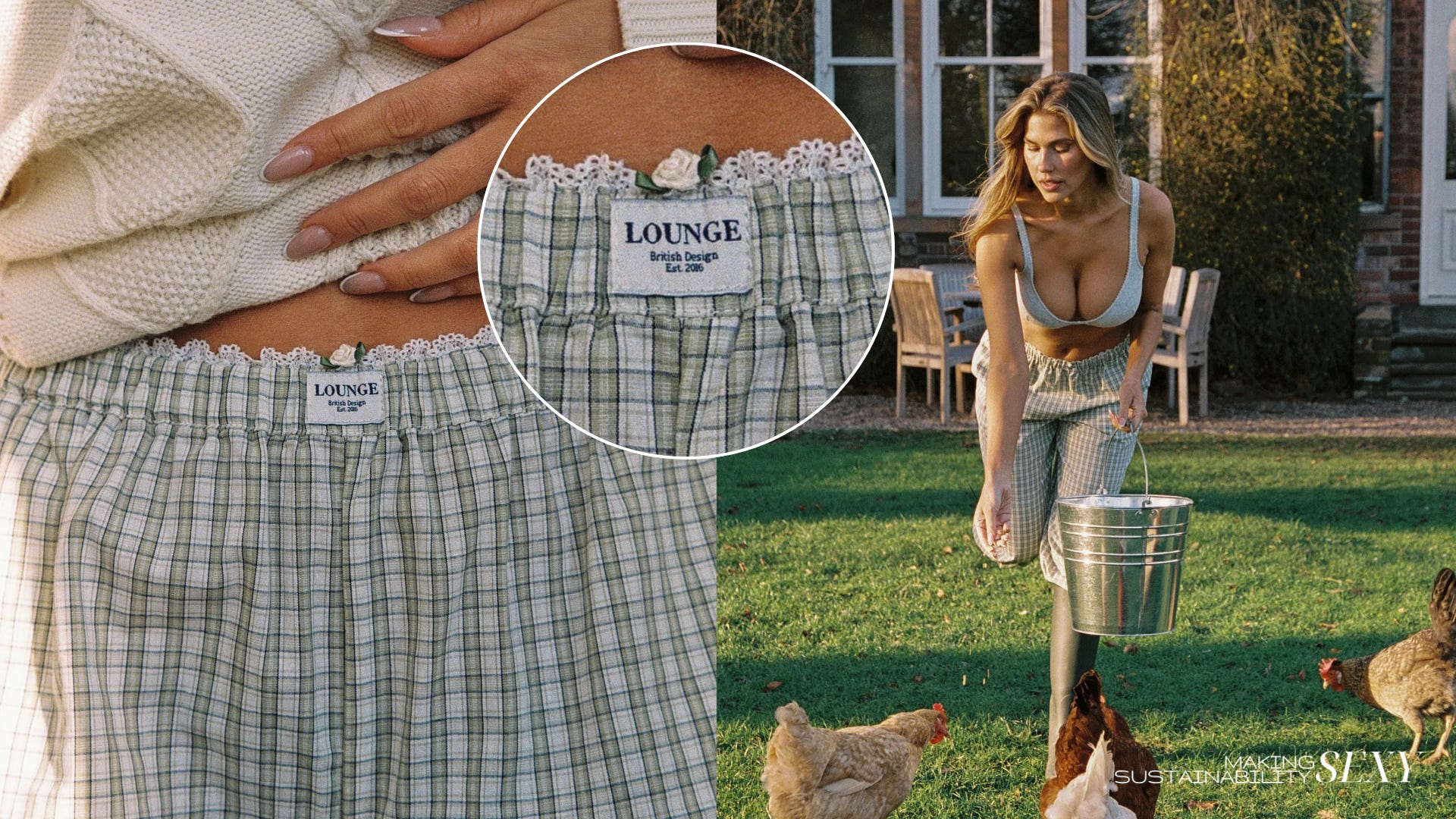
I was inspired to write this post after seeing Lounge Underwear’s Homegrown collection, filled with cottagecore-esque pieces modelled in a traditional English country house, proudly showing a label that reads ‘British Design’.
Immediately my interest was piqued.
With a knowledge of the brand and industry I knew what Lounge meant by this: their UK-based design team dream up the ideas for the collections, then their overseas factories manufacture them.
However, I also knew that putting this rather vague ‘British Design’ label on their garments was just ambiguous enough to leave some customers thinking that the item they’re buying was designed and made in Britain.
Made in Britain’s Buying British research showed that 50% of those surveyed said that they would prefer to buy a British-made product1, showcasing that they are willing to put their money towards something that has been designed and produced locally. The two key reasons behind this shopping decision were highlighted as: wanting to support the local economy, and the reduced environmental impact of shopping local.
So, with these figures in mind, it’s possible that certain consumers—motivated by their desire to buy British items—would be more likely to purchase a garment with ‘British Design’ on the label, in the hope that they are purchasing an item with a reduced carbon footprint, that simultaneously supports British manufacture.
And, in this case, that isn’t true.
This purchase would instead be supporting a company that seemingly manufactures predominantly in Asia, using a large percentage of synthetic materials. Over 75% of pieces in the Homegrown collection include at least a percentage of synthetic fibres—such as polyester or polyamide—with just over half being wholly fossil-fuel-based2.
Lounge’s website isn’t specific about where exactly they manufacture, but the inclusion of Chinese hydropower plants on their sustainability page lead us to believe that they likely produce their underwear somewhere in western China3. Half a world away from their Solihull-based HQ.
To be clear, this isn’t some hate train against Lounge. They are about as local as you can get to me—their head office is under an hour drive away—and they employ a lot of alumni from my very own degree course. Their success has been phenomenal, and their annual campaigns for breast cancer awareness are very refreshing to see, but that doesn’t mean we can’t point out areas where their marketing may be a little misleading.
And it’s true, they technically didn’t lie here. They did design these products in Britain. But I still believe that there’s something slightly misleading about leaning into that ‘British made’ aesthetic—especially when the collection is called Homegrown—without actually utilising any British fibres or manufacturers.
WHAT DOES A TRULY HOMEGROWN BRAND ACTUALLY LOOK LIKE?
Now that we’ve established what a slightly greenwashing locally-made marketing campaign could look like, let’s dive into what a truly homegrown brand looks like.
A brand that introduces a vertically-integrated system into their supply chain that grows, harvests, weaves, designs, and makes the products all within one country.
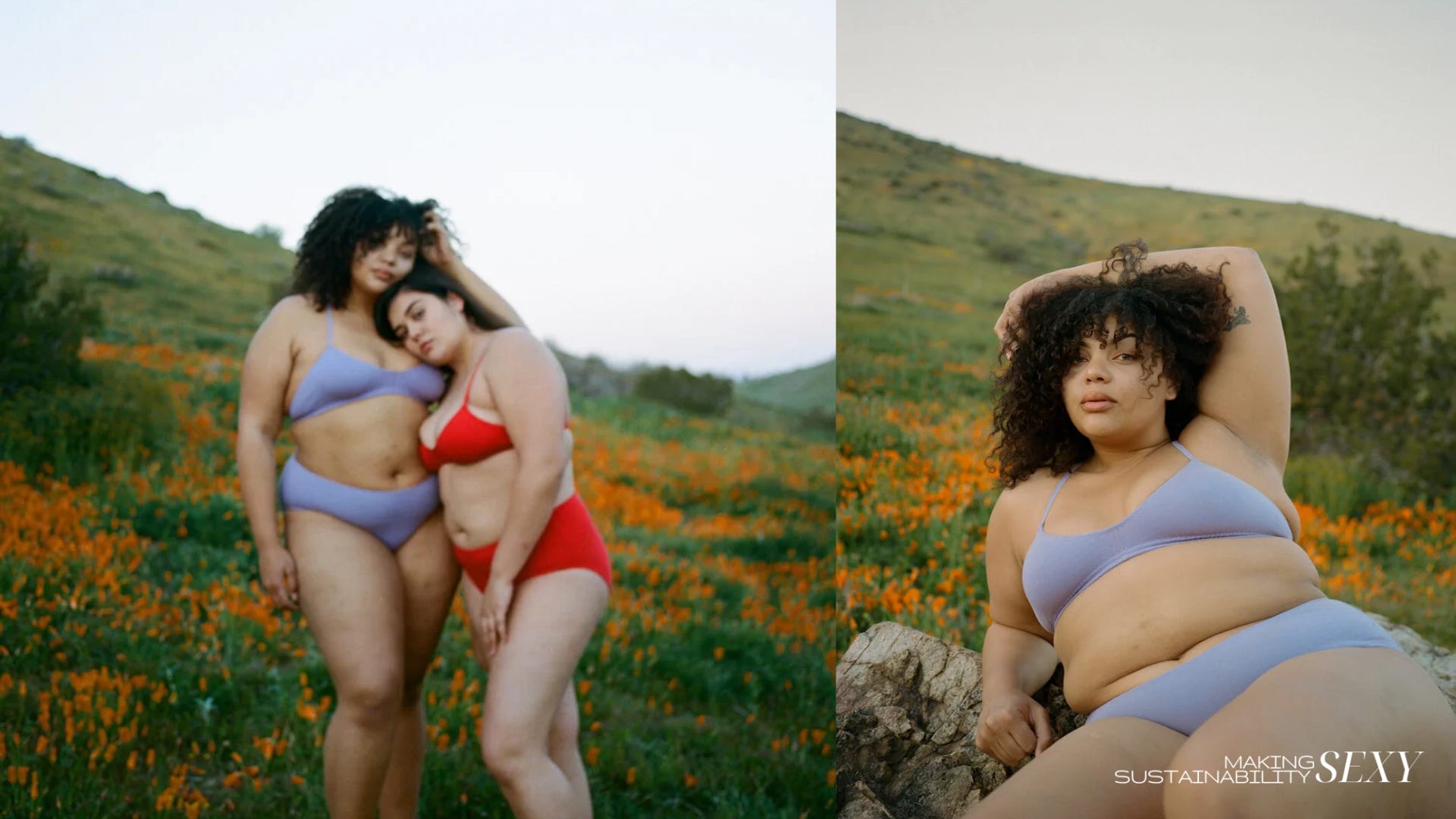
Pansy are a US-based underwear brand that are committed to sourcing and making their bras and knickers solely within the US.
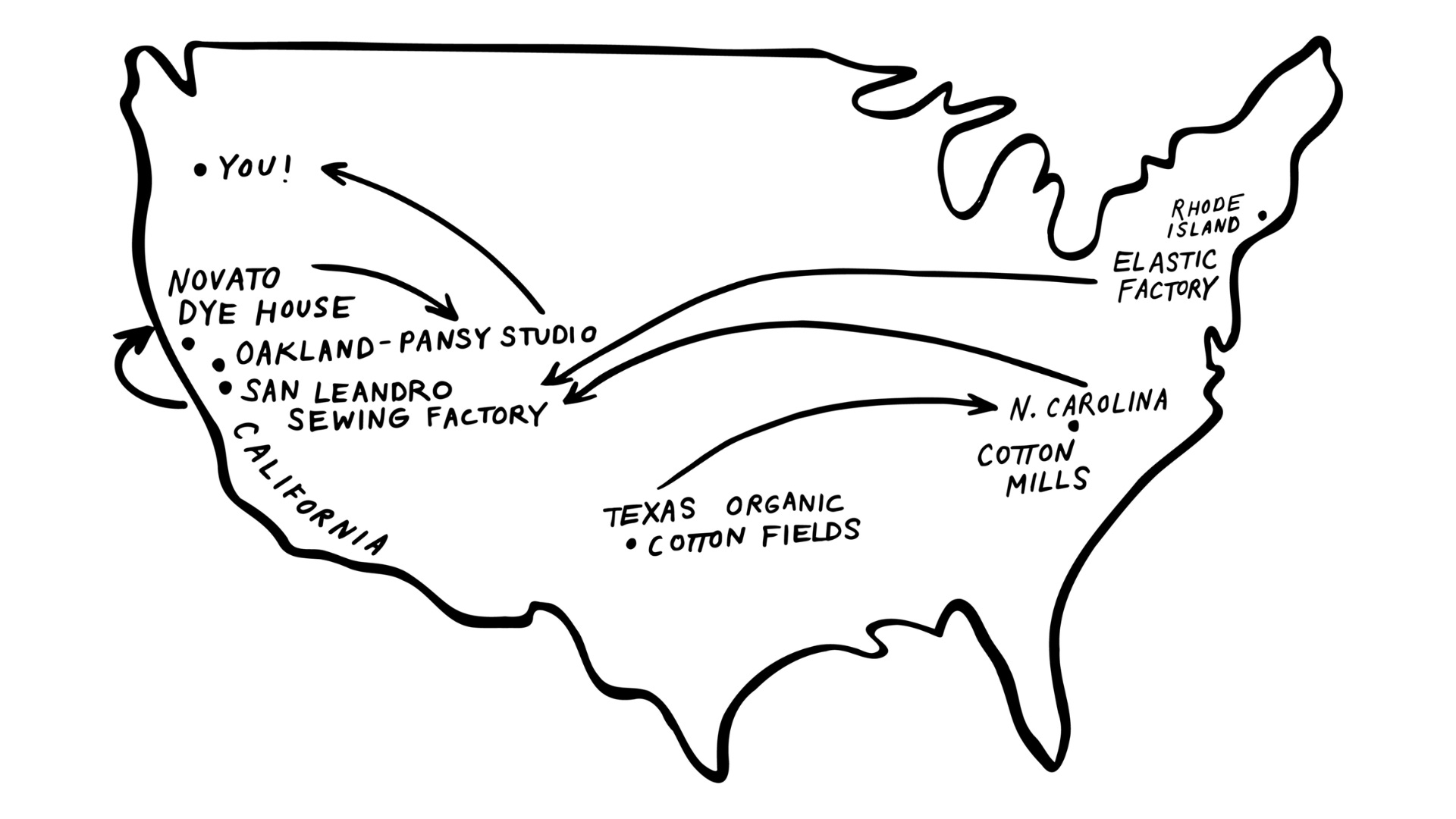
Their organic cotton is grown in Texas, before being cleaned, spun, and knit into their soft cotton fabric in North Carolina. Once the fabrics are woven it makes its way to Pansy’s factory in California, along with the Rhode Island-sourced natural rubber elastic, to be transformed into Pansy’s latest collection4.
All of their workers are paid a Californian living wage, and the factory fully complies with the guidelines established by the California Department of Industrial Relations, ensuring workers’ health and safety.
Their signature bright colourways are created through a non-toxic fibre-reactive dyeing process5, that reduces water and energy consumption. By dyeing ready-made garments they are dyeing what is only necessary, saving undyed pieces for future collections and colourways; responding to only what their customers actually want and drastically reducing overstock.
Pansy’s slow fashion approach—that combines the US’s climate and capability to grow beautiful organic cotton with the local artisanal skill of Californian seamstresses—celebrates the best of America whilst promoting what the future of the fashion industry could look like. One that utilises local produce and knowledge to produce garments that people actually want to wear.
Cutting out globalised overseas shipping costs and oversized carbon footprint, and instead celebrating natural fibres, local design, and regional knowledge.
Now that is homegrown.
Made in Britain (2024). Buying British Survey 2024 - Results Round-Up. Available at: https://www.madeinbritain.org/news/buying-british-survey-2024-results-round-up-apr-24 (Accessed 06/03/2026)
Calculations based on the ‘Fit and Fabric’ details given on all garments listed at: Lounge (2026). Homegrown. Available at: https://lounge.com/collections/homegrown?page=1 (Accessed 06/03/2026)
Lounge (2026). Sustainability. Available at: https://lounge.com/pages/sustainability (Accessed 06/03/2026)
Pansy (2026). Production. Available at: https://www.pansy.co/production (Accessed 06/03/2026)
Pansy (2026). Production. Available at: https://www.pansy.co/production (Accessed 06/03/2026)
This is soooo common in California with manufacturing happening in Asia.
I happen to be shopping for new undies in the US right now and will definitely be getting them from Pansy. Thank you for the deep dive!